
BioWorld Products For Oil Spill Cleanup using Bioremediation
| Product Code | Specialized Compounds |
|---|---|
35XXX |
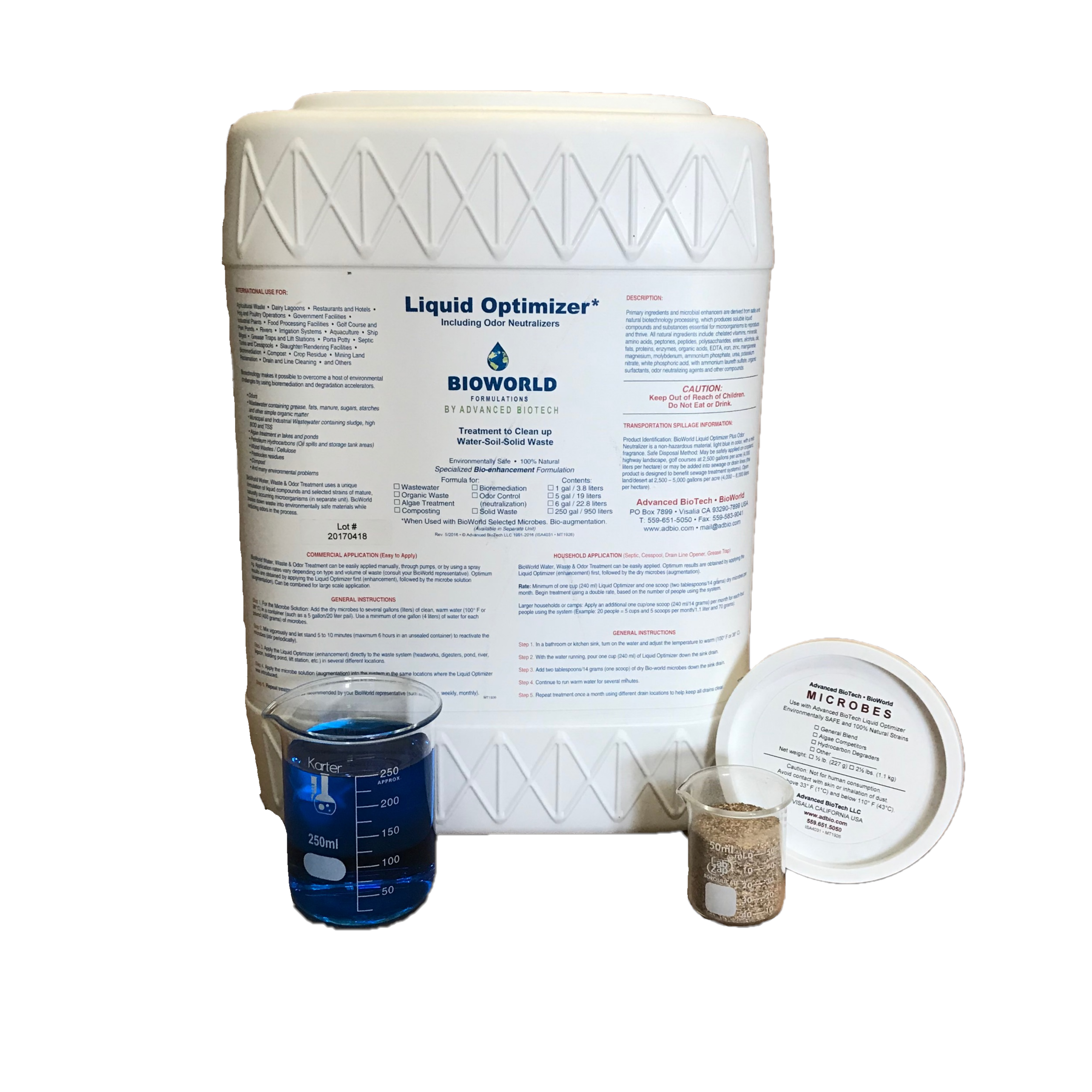
BioWorld Liquid Optimizer |
55XXX |
BioWorld Liquid Optimizer Plus – (Additional Odor Neutralizers) |
75XXX |
BioWorld Bioremediation Enhancer |
36XXX |
BioWorld General Blend Microbes |
32XXX |
BioWorld Hydrocarbon Digester Microbes |
41XXX |
BioWorld Odor Neutralizer |
NOTE: For areas with major odor issues and odor complaints. Replace # 35XXX with 55XXX
Open Drilling Pits
Combine:
- Product # 75XXX
- Product # 32XXX
Industrial Wastewater
Combine:
- Product # 75XXX
- Product # 32XXX
Food Grease Traps
Combine:
- Product # 75XXX
- Product # 32XXX
Petrochemical Wastewater
Combine:
- Product # 75XXX
- Product # 32XXX
Hydrocarbon / Petrochemical Bioremediation Products
Petrochemical Hydrocarbon Cleanup
Combine:
- Product # 75XXX
- Product # 32XXX
Use to degrade petroleum and refined hydrocarbon fractions, refinery wastewaters plus many industrial waste materials.
Formulated for soils, rivers, oceans, groundwater, concrete and industrial facilities.
Bioremediate these compounds and Industrial waste materials:
| Heavy Crude Oils | Napthalenes |
| Light Crude Oil | Surfactants |
| Gasoline | Phenols |
| Kerosene | Alcohols |
| Diesel | Glycols |
| Bunker “C” Fuels Oil | Nitriles |
| Amines | Lubricating Oils |
| Benzene | Cutting oils |
| Hexane | BTXE’S |
| MTBE | Aldehydes |
| TBA | Ketones |
| Esters | Aromatic Hydrocarbons |
| Detergents |
Types of Petroleum Oils
Characterization of crude oils and refined petroleum products in a release situation is one of the earliest response tasks that must be undertaken. Proper classification and an understanding of the chemical and physical properties of these substances helps determine the hazard to personnel and wildlife, the effects that may be observed on adjacent shorelines or estuaries (for spills into water), and the form a response should take. Non-petroleum-based oils also pose a potential threat to human health and the environment. This discussion focuses only on crude oils and refined products; non-petroleum oils are discussed elsewhere.
Chemical Composition
Crude oils and refined petroleum products consist largely of hydrocarbons, which are chemicals composed solely of hydrogen and carbon in various molecular arrangements. Crude oils contain hundreds of different hydrocarbons and other organic and inorganic substances including atoms of sulfur, nitrogen, and oxygen, as well as metals such as iron, vanadium, nickel, and chromium. Collectively, these other atoms are called heteroatoms. Certain heavy crude oils from younger geologic formations (e.g., Venezuelan crudes) contain less than 50 percent hydrocarbons and a higher proportion of organic and inorganic substances containing heteroatoms. The refining process removes many of the chemicals containing these heteroatoms. All crudes contain lighter fractions similar to gasoline as well as heavier tar or wax constituents, and may vary in consistency from a light volatile fluid to a semi-solid.
Petroleum products used for motor fuels are essentially a complex mixture of hydrocarbons. Gasolines are mixtures of hydrocarbons that contain 4 to 12 carbon atoms and have boiling points between 30 and 210 degrees Celsius. Kerosenes used for jet fuel contain hydrocarbons with 10 to 16 carbon atoms and have boiling points
between 150 and 240. Diesel fuels and bunkering fuels contain hydrocarbons with higher numbers of carbon atoms and higher boiling points. In addition, diesel fuels and bunkering fuels have greater proportions of compounds containing heteroatoms.
Upon release, the hydrocarbons that are composed of fewer carbon and hydrogen atoms vaporize, leaving behind a heavier, less volatile fraction. Gasolines contain relatively high proportions of toxic and volatile hydrocarbons, such as benzene, which is known to cause cancer in humans, and hexane, which can affect the nervous system. Gasoline and kerosene releases are exceptionally hazardous due to their high flammability. Crude oils and semi-refined products, such as diesel and bunkering oils, may contain cancer-causing polycyclic aromatic hydrocarbons and other toxic substances.
Petroleum Oils
Petroleum-based oil describes a broad range of natural hydrocarbon-based substances and refined petroleum products, each having a different chemical composition. As a result, each type of crude oil and refined product has distinct physical properties that affect the way oil spreads and breaks down, the hazard it may pose to marine and human life, and the likelihood that it will pose a threat to natural and man-made resources. For example, light refined products, such as gasoline and kerosene, spread on water surfaces and penetrate porous soils quickly. Fire and toxic hazards are high, but the products evaporate quickly and leave little residue. Alternatively, heavier refined oil products may pose a lesser fire and toxic hazard and do not spread on water as readily. Heavier oils are more persistent, however, and may present a greater remediation challenge.
The rate at which an oil spill spreads will determine its effect on the environment. Most oils tend to spread horizontally into a smooth and slippery surface, called a slick, on top of the water. Factors which affect the ability of an oil spill to spread include surface tension, specific gravity, and viscosity.
- Surface tension is the measure of attraction between the surface molecules of a liquid. The higher the oil’s surface tension, the more likely a spill will remain in place. If the surface tension of the oil is low, the oil will spread even without help from wind and water currents. Because increased temperatures can reduce a liquid’s surface tension, oil is more likely to spread in warmer waters than in very cold waters.
- Specific gravity is the density of a substance compared to the density of water. Since most oils are lighter than water, they lie flat on top of it. However, the specific gravity of an oil spill can increase if the lighter substances within the oil evaporate.
- Viscosity is the measure of a liquid’s resistance to flow. The higher the viscosity of the oil, the greater the tendency for it to stay in one place.
Types of Crude Oil
The petroleum industry often characterizes crude oils according to their geographical source, e.g., Alaska North Slope Crude. Oils from different geographical areas have unique properties; they can vary in consistency from a light volatile fluid to a semi-solid. Classification of crude oil types by geographical source is generally not a useful classification scheme for response personnel because they offer little information about general toxicity, physical state, and changes that occur with time and weathering. These characteristics are primary considerations in oil spill response. The classification scheme provided below is more useful in a response scenario.
Class A: Light, Volatile Oils
These oils are highly fluid, often clear, spread rapidly on solid or water surfaces, have a strong odor, a high evaporation rate, and are usually flammable. They penetrate porous surfaces such as dirt and sand, and may be persistent in such a matrix. They do not tend to adhere to surfaces; flushing with water generally removes them. Class A oils may be highly toxic to humans, fish, and other biota. Most refined products and many of the highest quality light crudes can be included in this class.
Class B: Non-Sticky Oils
These oils have a waxy or oily feel. Class B oils are less toxic and adhere more firmly to surfaces than Class A oils, although they can be removed from surfaces by vigorous flushing. As temperatures rise, their tendency to penetrate porous substrates increases and they can be persistent. Evaporation of volatiles may lead to a Class C or D residue. Medium to heavy paraffin-based oils fall into this class.
Class C: Heavy, Sticky Oils
Class C oils are characteristically viscous, sticky or tarry, and brown or black. Flushing with water will not readily remove this material from surfaces, but the oil does not readily penetrate porous surfaces. The density of Class C oils may be near that of water and they often sink. Weathering or evaporation of volatiles may produce solid or tarry Class D oil. Toxicity is low, but wildlife can be smothered or drowned when contaminated. This class includes residual fuel oils and medium to heavy crudes.
Class D: Nonfluid Oils
Class D oils are relatively non-toxic, do not penetrate porous substrates, and are usually black or dark brown in color. When heated, Class D oils may melt and coat surfaces making cleanup very difficult. Residual oils, heavy crude oils, some high paraffin oils, and some weathered oils fall into this class.
These classifications are dynamic for spilled oils; weather conditions and water temperature greatly influence the behavior of oil and refined petroleum products in the environment. For example, as volatiles evaporate from a Class B oil, it may become a Class C oil. If a significant temperature drop occurs (e.g., at night), a Class C oil may solidify and resemble a Class D oil. Upon warming, the Class D oil may revert back to a Class C oil.
Types of Refined Petroleum Products
Refined petroleum products are derived from crude oils through processes such as catalytic cracking and fractional distillation. These products have physical and chemical characteristics that differ according to the type of crude oil and subsequent refining processes. Several examples of refined petroleum products and their properties include:
Gasoline
A lightweight material that flows easily, spreads quickly, and may evaporate completely in a few hours under temperate conditions. It poses a risk of fire and explosion because of its high volatility and flammability, and is more toxic than crude oil. Gasoline is amenable to biodegradation, but the use of dispersants is not appropriate unless the vapors pose a significant human health or safety hazard.
Kerosene
A lightweight material that flows easily, spreads rapidly, and evaporates quickly. Kerosene is easily dispersed, but is also relatively persistent in the environment.
No. 2 Fuel Oil
A lightweight material that flows easily, spreads quickly, and is easily dispersed. This fuel oil is neither volatile nor likely to form emulsions, and is relatively non-persistent in the environment.
No. 4 Fuel Oil
A mediumweight material that flows easily, and is easily dispersed if treated promptly. This fuel oil has a low volatility and moderate flash point, and is fairly persistent in the environment.
No. 5 Fuel Oil (Bunker B)
A mediumweight to heavyweight material with a low volatility and moderate flash point. Preheating may be necessary in cold climates, and this fuel oil is difficult, if not impossible, to disperse.
No. 6 Fuel Oil (Bunker C)
A heavyweight material that is difficult to pump and requires preheating for use. This fuel oil may be heavier than water, is not likely to dissolve, is difficult or impossible to disperse, and is likely to form tar balls, lumps, and emulsions. It has a low volatility and moderate flash point.
Lubricating Oil
A mediumweight material that flows easily and is easily dispersed if treated promptly. This oil has a low volatility and moderate flash point, but is fairly persistent in the environment.
Non-Petroleum Oils
EPA interprets the Clean Water Act definition of oil to include non-petroleum oils as well as petroleum and petroleum-refined products. Non-petroleum oils include synthetic oils, such as silicone fluids, tung oils, and wood-derivative oils, such as resin/rosin oils, animal fats and oil, and edible and inedible seed oils from plants.
Many non-petroleum oils have similar physical properties as petroleum-based oils; for example, their solubility in water is limited, they both create slicks on the surface of water, and they both form emulsions and sludges. In addition, non-petroleum oils tend to be persistent, remaining in the environment for long periods of time.
Like petroleum-based oils, non-petroleum oils can have both immediate and long-term adverse effects on the environment and can be dangerous or even deadly to wildlife. For example, non-petroleum oils can deplete available oxygen needed by aquatic organisms, foul aquatic biota, and coat the fur and/or feathers of wildlife. For example, when a bird’s plumage is coated with non-petroleum oil, their feathers lose their insulating properties, placing them at risk of freezing to death. Birds that are covered with non-petroleum oils also can smother embryos through the transfer of non-petroleum oil from the parents’ plumage to the eggs. Birds and wildlife can ingest oil directly and may continue to ingest the oil as they eat if the source of their food consists of fish, shellfish, or vegetation that also are contaminated with non-petroleum oils. Other adverse effects of spilled non-petroleum oil on bird and wildlife include drowning, mortality by predation, dehydration, starvation, and/or suffocation.
Vegetable Oils and Animal Fats
Background
Under the Clean Water Act, as amended by the Oil Pollution Act of 1990, vegetable oils and animal fats are considered oils. This summary provides information on EPA’s decision to deny a petition of several agricultural trade organizations to allow facilities that store vegetable oils or animal fats to use different and less stringent response methods in planning for spills of these oils under the Facility Response Plan (FRP) rule (40 CFR 112.20-.21; July 1, 1994 ). The FRP rule requires certain facilities, whose discharge could cause significant environmental harm, to prepare and implement response plans. The EPA FRP rule already provides greater flexibility to vegetable oil or animal fat facilities in the development of these plans than what is required for petroleum facilities.
Based on information provided by industry, only a small number (approximately 50 to 100) of vegetable oil or animal fat storage facilities are required to prepare FRP’s under the rule. These facilities meet the rule’s substantial harm criteria due to their potential to impact sensitive areas, including drinking water intakes, or due to certain facility characteristics.
Summary
The EPA has considered the physical, chemical, biological, and other properties and environmental effects of petroleum oils, vegetable oils, and animal fats, which are the criteria now to be evaluated under the Edible Oil Regulatory Reform Act. EPA finds that petroleum oils, vegetable oils, and animal fats share common physical properties and produce similar environmental effects. Like petroleum oils, vegetable oils and animal fats and their constituents can:
- Cause devastating physical effects, such as coating animals and plants with oil and suffocating them by oxygen depletion
- Be toxic and form toxic products
- Destroy future and existing food supplies, breeding animals, and habitats
- Produce rancid odors
- Foul shorelines, clog water treatment plants, and catch fire when ignition sources are present
- Form products that linger in the environment for many years.
The Petitioners did not demonstrate that spills of animal fats and vegetable oils are free of adverse impacts on the environment. Scientific research and experience with actual spills have shown that spills of animal fats and vegetable oils kill or injure fish, birds, mammals, and other species and produce other undesirable effects. Waterfowl and other birds, mammals, and fish that get coated with animal fats or vegetable oils could die of hypothermia, dehydration and diarrhea, or starvation. They can also sink and drown or fall victim to predators. Fish and other aquatic organisms may suffocate because of the depletion of oxygen caused by spilled animal fats and vegetable oils in water. Whether these oils are “toxic” to wildlife or kill wildlife indirectly through other processes is not the issue. Spills of animal fats and vegetable oils have the same or similar devastating impacts on the aquatic environment as petroleum oils.